
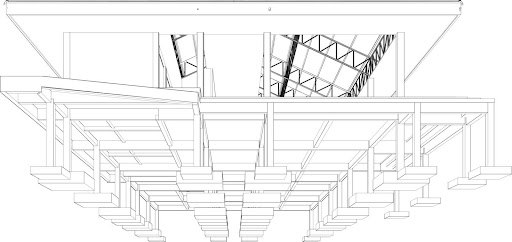
Today construction has evolved to be way more complicated than just putting materials together at the site of construction. Whatever it is—a steel structure, a custom facade, HVAC ducting, or plumbing layouts—each and every element has to be made with absolute precision before it gets to the construction site. That’s where fabrication drawing services come to the rescue. These are crucial drawings that serve as a link between the design stage and the actual production process; thus, they are very helpful for contractors, manufacturers, and engineers to be in total alignment.
Fabrication drawings are an absolute must in modern times, when industries operate on very tight schedules and there is almost no room for error. Construction drawings can lead to the building of safer structures, provide money-saving error avoidance, and guarantee that different teams become co-workers, thus working efficiently even in rapidly developing construction scenarios.
Understanding the Purpose of Fabrication Drawings
Fabrication drawings are detailed, very technically accurate diagrams that are made for the creation of the individual parts that are going to be used in a construction project. They differ from architectural drawings that merely depict the design of a project. These drawings show the details of the process in action and are ready for production.
They typically include:
- Exact dimensions and measurements
- Welding details
- Material specifications
- Hole and cut placements
- Assembly information
- Tolerances and finishing guidelines
Basically, these drawings are the manufacturing steps for the fabricators to execute. In manufacturing, even the smallest of confusions or the least missing detail can result in errors, delays, or the going over of work again that will cost money.
Why Fabrication Drawings Have Become Essential Today
The demand for precision has gone up along with the rapid evolution of construction methods. Accurate pre-production details are very important for advanced materials, modular building techniques, and off-site manufacturing.
- Ensures Accuracy and Consistency
Fabricators take these drawings as their guide in making the components that are the perfect fit when they are assembled at the site. The accurate drawings serve as measures against the possibility of dimensional mismatches, alignment issues, or structural weaknesses.
- Saves Time and Reduces Errors
If fabricators get a clear plan, they can produce more in less time. It reduces the time of conversation between two parties, and at the same time, it also greatly reduces the possibility of misunderstanding of the design.
- Improves On-Site Coordination
The construction project is a complex system involving different stakeholders such as architects, engineers, contractors, and manufacturers. Fabrication drawings are the documents that can ensure that all these groups cooperate under one single plan.
- Supports Modern Construction Technologies
The present-day industry implements a number of digital instruments such as BIM, 3D modeling, and automated fabrication systems. The detailed fabrication drawings work as a liaison between these technologies.
Types of Fabrication Drawings Used in Construction
Production processes vary depending on the different systems; hence, fabrication drawings differ from one another in that respect. A few common categories to mention are:
- Steel Fabrication Drawings
They consist of the details for the various types of structural elements, such as beams, columns, staircases, trusses, and railings. They identify the types of welds, cuts, orientations, and finishing standards through which these elements are realized.
- MEP Fabrication Drawings
To route, connect, and size the components of mechanical, electrical, and plumbing systems, precise layouts are necessary.
- Sheet Metal and HVAC Fabrication Drawings
Used for ducting, ventilation systems, and custom metal components.
- Architectural Metalwork Drawings
Applicable to façades, canopies, cladding, gates, and decorative metal elements.
- Millwork and Wood Fabrication Drawings
For furniture, cabinetry, doors, panels, and custom interior fittings.
The role of highly skilled drafting specialists becomes even more significant, as each different type of approach is a unique one.
The Role of Technology in Enhancing Fabrication Drawing Quality
One of the most significant changes in the creation of fabrication drawings is the use of digital tools. AutoCAD, Revit, and Tekla Structures are examples of software that enable draftsmen to make intricate 2D and 3D drawings. Besides that, they facilitate the elimination of errors at the very beginning by means of automated verifications as well as clash detection features.
Some ways technology enhances the process include:
- 3D modeling for better visualization
- BIM integration for smoother project coordination
- Faster revisions and version control
- Digitally shareable files that all teams can access
- Automated extraction of bills of materials (BOM)
This reduces human error and increases overall efficiency—something essential in large-scale projects.
How Fabrication Drawing Services Improve Real-World Construction Efficiency
Fabrication drawings are far from being only technical files. They have a very direct influence on the project timelines, budget, and even the overall quality. Fabrication drawing services are mentioned in the second instance. They help to streamline the coordination between the units of off-site fabrication and the teams of on-site assembly.
Here’s how they contribute to smoother construction workflows:
- Minimizing Material Wastage
Precise measurements reduce unnecessary cutting, trimming, or scrapping of materials.
- Enhancing Structural Safety
Accurate detailing ensures components are produced and assembled as intended, reducing safety risks.
- Improving Communication Across Teams
Everyone, from engineers to installers, relies on the same information.
- Making Quality Control Easier
Detailed drawings allow for better inspection and verification during production and installation.
Key Qualities of Well-Prepared Fabrication Drawings
Seasoned drafting experts conform to industry regulations and resort to top-notch instruments for the sake of both clearness and precision. A top-notch fabrication drawing is one that contains:
- Clean, readable layouts
- Correct and consistent dimensioning
- Proper annotations
- Accurate scaling
- Standard symbols and conventions
- Clear material and finishing details
These characteristics ensure that manufacturers and contractors can follow the drawings with confidence.
A Forward-Looking Approach to Construction Detailing
The necessity for outlining in detail will keep on rising as building methods are progressively adopting modular, digital, and off-site manufacturing ways. Fabrication drawing services will be the main driver of construction efficiency in the future, as they are the ones that practically, measurably, and reliably link design to production in the real world. A partnership with a talented team can be a game-changer for companies that are looking for dependable assistance in areas of such nature as CAD drawing services, structural shop drawings, steel detailing services, and BIM coordination.
DesignsMosaic delivers the necessary skills, the exactness, and the right technical background to meet these demands, thus easing the construction professionals’ way to better-aligned designs, smoother fabrication processes, and higher-quality outcomes.