
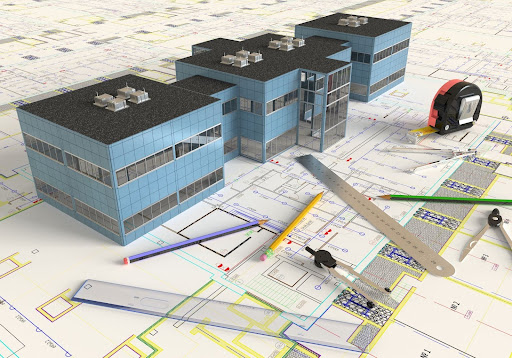
The construction and engineering industry will soon be emphasizing more on precision, coordination, and digital efficiency than anything else. Due to an increase in the complexity of projects and a decrease in time limits, structural shop drawings services have become not only technical deliverables but also strategic tools that have an impact on the success of the project. Several trends are changing the way these drawings are made, looked at, and used for construction in the coming time 2026.
We base these trends leading to future drawings on industry demands and a practical approach to projects.
Smarter Use of BIM for Constructability
Building Information Modeling (BIM) has changed its role from being only a visualization tool to something more. In fact, the significant value of BIM in 2026 will be in creating models that are focused on constructability. Structural shop drawings are the result of extraction from smart BIM models, which already take into account factors such as connections, tolerances, sequencing, and on-site constraints.
These changes enable the team to:
- Detect clashes earlier across structural, architectural, and MEP systems
- Verify fabrication feasibility even before placing material orders
- Eliminate design interpretation, related rework
BIM is no longer regarded as a distinct procedure; it is becoming the foundation for the most accurate and coordinated shop drawings.
Greater Emphasis on Connection Detailing
One of the sources of structural problems that are still caused by the failure of connections is the most common issue. Hence, connection detailing is becoming the focal point of modern-day shop drawing as well. The engineers and detailers are working together more than ever to ensure that the bolted, welded, and hybrid connections not only comply with the requirements of the code but also with the realities of the fabrication.
In a great number of projects, integration of connection design into the detailing phase is done directly, thus the connection design being considered as a later revision is avoided.
Why Experience Still Drives High-Quality Detailing
Automation tools and AI-assisted detailing are becoming more capable, especially for repetitive elements like beams, columns, and standard joints. By 2026, automation is anticipated to take care of routine drafting tasks in a very efficient manner. This will result in professionals being freed to focus on judgment-based decisions.
However, the trend is not about vanishing expertise. The human check is still very essential for:
- Load path interpretation
- Complex geometries
- Non-standard materials or construction methods
The best workflows are those that harness the automation speed and the human experience oversight.
Mid-Project Integration of structural shop drawings services
Another prominent trend is the earlier and greater extent of the structural shop drawings services‘ involvement in the project phases that are already underway. Instead of being finalized after design approval, shop drawings are now being prepared along with structural engineering and coordination models.
This integrated approach can:
- Help shorten the overall project timelines
- Enhance the coordination between the design intent and the fabrication needs
- Provides quicker response to design changes
When shop drawings are co-evolving with the design, they are not considered as final outputs but as living documents.
Rise of Cloud-Based Collaboration
It is common now that project teams are distributed. Cloud-based platforms are making it easier and faster to manage revisions, comments, and approvals. There is no delay. For shop drawings, this means version control is clearer, markups are centralized, and stakeholders always access the most current information.
Key benefits include:
- Reduced miscommunication between teams
- Faster approval cycles
- Better documentation of decision history
In 2026, collaboration in real time will be the standard, versus being an option.
Detailing for Modular and Prefabricated Construction
The growing use of modular and prefabricated construction methods is the main factor behind the change in the structural shop drawings. Components are increasingly being fabricated away from the site, so the drawings should reflect the transport restrictions, the locations of the lifting points, the assembly sequences, as well as the tight dimensional tolerances. This tendency gives the detailing teams a higher degree of awareness that they not only have to deal with the individual elements but also have to think about how the structures are combined in actual conditions.
Easily understandable part labeling, accurate connection details, and assembly-ready documentation contribute to the success of prefabricated components in the efficient installation process on-site; thus, the occurrence of delays and alignment issues is kept at a minimum.
Increased Focus on Compliance and Documentation
Quality audits and regulatory requirements are getting tougher in the different markets for construction all over the world. It is now expected that structural shop drawings show in detail that they follow the applicable codes, standards, and project specifications.
The above has caused more formalized documentation practices, such as:
- Reference notes that are very clear on the codes that govern
- Clear material and grade identification
- Traceable revision history
Well-documented drawings decrease the chances of risk, and they, therefore, create more value for the client after the construction period.
Sustainable Design Influencing Detailing Choices
Structures’ sustainability goals are the main influence on their detailing. Material optimization, efficient load transfer, and reduced waste are being directly reflected in shop drawings. Fabrication efficiency and material reuse are now at the same level, with strength and safety in consideration of the next use of the fabrication by-products.
This trend helps the project goals that are:
- Lower embodied carbon
- Reduced on-site material waste
- Improved lifecycle performance
Structural detailing is gradually becoming one of the main contributors to sustainability outcomes.
A Forward-Looking Perspective
As we move toward 2026, the role of structural shop drawing services will continue to expand beyond drafting. They will be instruments for coordination, tools for risk management, and connectors linking the design idea with the actual physical work.
From our point of view, to be in tune with these trends, a company needs not only technical competence but also flexibility. At Design Mosaic, we are able to combine advanced modeling techniques with practical knowledge of detailing, thereby providing the project teams with a safe way through complex works.
Also, with the rising demand for integrated solutions, clients want a provider who is skilled in BIM coordination, structural steel detailing, connection design, rebar detailing, and construction documentation, and who can offer these services with the fundamental values of accuracy, clarity, and collaboration.