
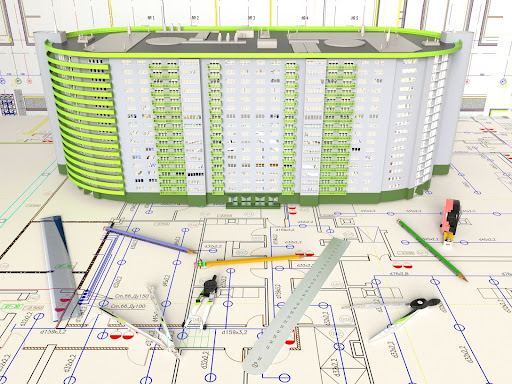
The concept of Building Information Modeling (BIM) has revolutionized the way architects, engineers, and other construction professionals collaborate to achieve the best outcome in complex projects. Since multiple disciplines are involved in the project simultaneously, it is of prime importance to maintain proper coordination to avoid conflicts, delays, and modifications in the project. This is where the concept of BIM coordination plays an important role in the success of the project. Many companies in the world are now using the concept of structural engineering outsourcing in India to achieve the best outcome in their complex projects.
It is quite evident that the implementation of an effective BIM coordination process is the need of the hour in the world of complex project development. If the process is implemented correctly, it is possible to achieve the best outcome in the project.
Understanding the Role of BIM Coordination
BIM coordination is the process of integrating and reviewing building models from different disciplines to ensure proper coordination and effective interaction of the building components with no conflicts. Any building design consists of several models, such as the building’s architecture, structure, mechanical, plumbing, and electrical plans.
Unless coordinated, building components may overlap or conflict with other components, such as a duct passing through a beam or a pipe colliding with a column. BIM coordination helps identify such conflicts at the design stage of the building.
The main goals of BIM coordination include:
- To identify and solve conflicts and clashes among building components
- To ensure accurate design with consideration of all building disciplines
- To improve communication among stakeholders
- To reduce delays and building errors
- To improve overall building efficiency
In this way, problems can be recognized and addressed before the start of construction.
Establishing a Clear BIM Execution Plan
A successful coordination process starts with the development of a clear BIM Execution Plan (BEP). This document outlines the BIM process for the entire project and ensures that all stakeholders use the same BIM standard.
A BIM Execution Plan should include the following information:
- Project objectives and BIM goals
- Roles and responsibilities of team members
- Modeling standards and file formats
- Level of Detail (LOD) requirements
- Coordination schedules and review timelines
- Communication protocols
All of the above information should be included in the BIM Execution Plan to ensure that all stakeholders use the same standard for the entire duration of the project.
Developing Accurate Discipline Models
Before the actual process of coordination can begin, it is essential that all the disciplines create accurate and well-structured models. Structural, architectural, and MEP designers create their respective models depending on the Level of Detail requirements of the project.
Consistency is key at this stage. Models must adhere to standardized naming conventions, coordinate systems, and modeling practices. Inaccurate modeling practices can lead to complications, thus resulting in increased chances of errors.
To ensure accurate modeling, it is essential to:
- Maintain consistency in the coordinate system
- Utilize standardized families/components
- Avoid model complexities
- Ensure accurate categorization of model elements
Such practices facilitate the integration of various models into a single coordination environment.
Conducting Regular Clash Detection
One of the most important parts of the BIM coordination process is the clash detection. Various specialized software programs can be utilized for the detection of clashes between the building elements.
Three types of clashes have been identified, which include:
Hard Clashes
Hard clashes occur when two physical elements clash, for instance, the clash between a beam and a duct.
Soft Clashes
Soft clashes occur due to the space requirements, for instance, the requirement for adequate space for maintenance.
Workflow Clashes
Workflow clashes occur due to the construction sequence or the installation sequence.
Regular clash detection sessions can be conducted, which helps the teams to discuss the models. Companies also collaborate with teams that have expertise in structural engineering outsourcing in India for the purpose of carrying out the model development.
In such cases, companies also end up working with teams that specialize in structural engineering outsourcing in India to help in the development of the models while assisting in the coordination reviews to ensure that the project is always on schedule.
Improving Collaboration Through Coordination Meetings
It is not possible to achieve success in BIM coordination with the help of technology; it is equally important to maintain proper communication with the stakeholders involved in the project.
Coordination meetings are an effective way to improve the level of collaboration in the project. In such meetings, architects, structural engineers, designers of the MEP systems, project managers, and BIM coordinators are present.
During the coordination meetings, the following activities are usually carried out:
- Review clash detection reports
- Prioritize critical design conflicts
- Assign responsibilities for resolving clashes
- Establish deadlines for model updates
- Document decisions for future reference
This will ensure that there is continued alignment between the various disciplines and that coordination issues do not arise and escalate unnecessarily.
Maintaining Version Control and Model Updates
As the project develops, design changes will inevitably occur, and hence, there is a need to ensure that the design updates are properly managed through version control and model updates.
If version control is not properly managed, there is a high possibility of coordination problems arising from the use of outdated models, leading to duplication of work. The BIM coordinator is responsible for ensuring that there is a repository of models that contain the latest versions of the design models.
The best practices for version control include:
- Maintaining a centralized model environment
- Tracking the models through updates
- Uploading models regularly
- Archiving the models
This ensures that all the stakeholders are working with the right information at all times.
Leveraging Technology for Efficient Coordination
BIM coordination involves the use of sophisticated software technology, which enables the team to review, analyze, and collaborate on complex models.
This technology enables the team to:
- Integrate multiple discipline models
- Automate clash detection
- Produce coordination reports
- Visualize design conflicts in 3D
- Monitor progress of issue resolutions
Another technology used in BIM coordination is the use of cloud-based collaboration platforms, which enable dispersed teams to collaborate regardless of their location.
This technology has helped make global collaboration more efficient, enabling firms to work on large-scale projects with greater accuracy and transparency.
Integrating BIM Coordination into the Project Lifecycle
BIM coordination is not an activity that can be conducted once. It is an activity that must be conducted throughout the entire project lifecycle, from the design development phase to the construction documentation phase, including the facility management phase.
A good BIM coordination workflow helps in the following ways:
- Visualization of the entire project
- Reduces construction risks
- Helps control costs
- Aims for faster construction
- Delivers better quality
When BIM coordination is conducted as an ongoing process rather than as a one-time activity, the construction process is made more efficient.
Building Smarter Projects Through Strategic BIM Collaboration
An efficient BIM coordination process is based on the integration of technology, workflow, and collaboration. By setting standards, performing regular coordination reviews, and ensuring the accuracy of the model, teams can achieve significant improvements in design coordination and project success.
Many engineering companies today are able to enhance their coordination capabilities through structural engineering outsourcing in India, helping them achieve the accuracy of the model and the ability to handle complex infrastructure projects. Companies like Designs Mosaic play an important role in this regard, offering their expertise in alignment with the evolving BIM processes and project needs worldwide.
As the BIM technology is evolving, the integration of advanced tools, cloud-based collaboration tools, and services such as BIM modeling services, structural drafting services, MEP coordination services, BIM clash detection services, and 3D BIM modeling services will play a vital role in helping project teams achieve smarter project results.