
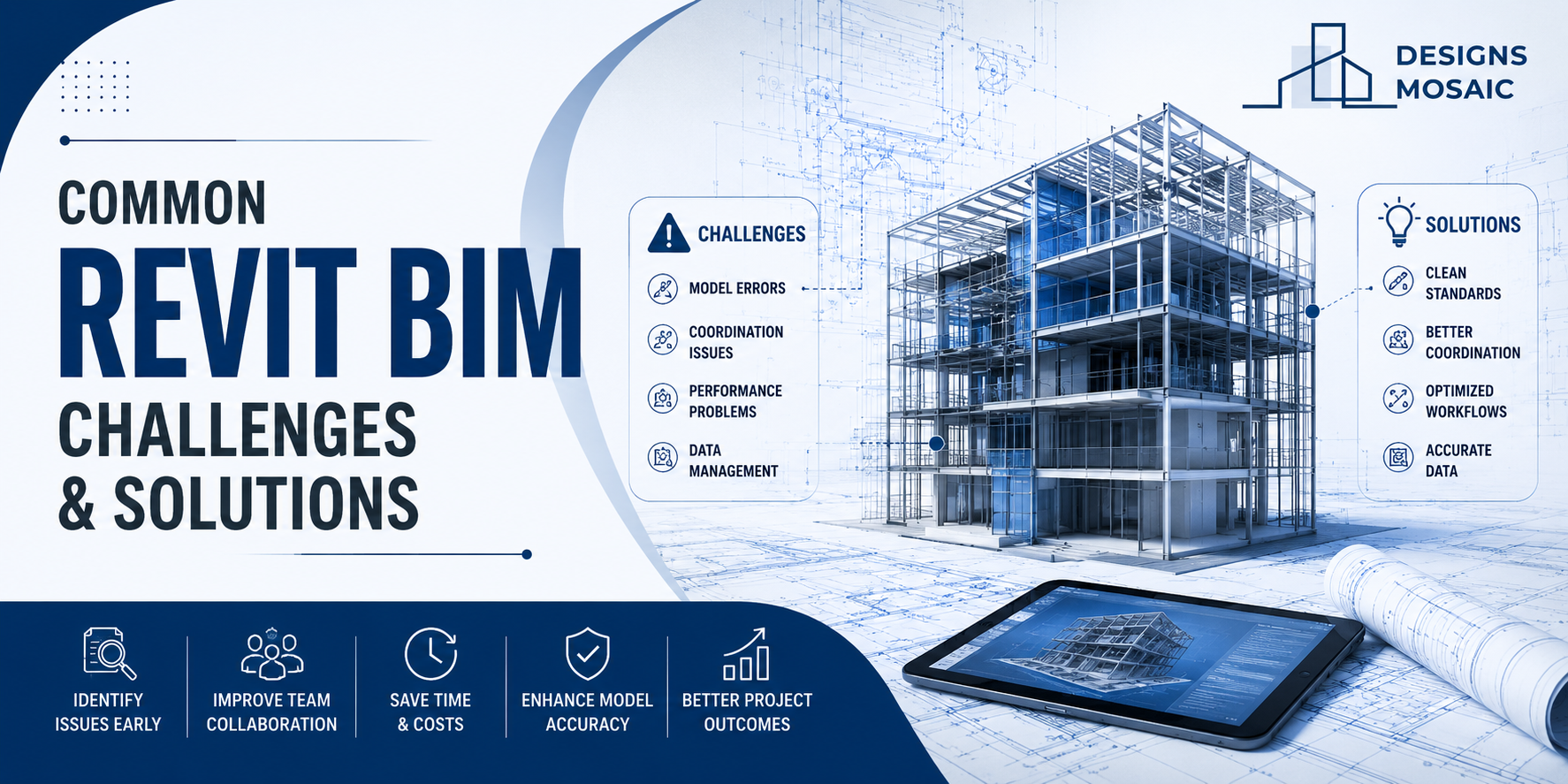
Digital design has transformed the way construction projects are planned, coordinated and delivered. Yet even with advanced software, successful Building Information Modelling depends on far more than creating a three-dimensional model. The quality of collaboration, project standards and technical expertise often determine whether a project progresses smoothly or encounters costly setbacks.
For organisations relying on Revit BIM modeling services, understanding the most common modelling challenges is just as important as selecting the right technology. Many issues can be prevented when engineering teams establish structured workflows and maintain consistent coordination throughout the project.
Why Challenges Still Exist in BIM Workflows
Revit provides powerful modelling capabilities, but it cannot automatically resolve inconsistencies between multiple disciplines or compensate for incomplete project information.
As projects become larger and more collaborative, architectural, structural and MEP teams contribute to the same digital environment. Without proper management, even small discrepancies can multiply into significant coordination issues.
The objective of effective Revit BIM modeling services is not simply producing a model, it is creating a dependable source of project information that supports every stage of delivery.
Inconsistent Model Standards
One of the earliest problems many project teams encounter is inconsistent modelling practices.
Different consultants may apply varying naming conventions, family standards, levels of detail or documentation methods. While these differences may appear minor initially, they can create confusion as the project develops.
Engineering teams address this by:
- Establishing modelling standards before work begins
- Defining shared project templates
- Maintaining consistent file organisation
- Applying agreed naming conventions across disciplines
Standardisation creates a more predictable workflow and improves collaboration throughout the project.
Coordination Between Multiple Disciplines
Architectural, structural and MEP models rarely evolve at exactly the same pace.
As revisions occur, models can quickly become misaligned if communication is inconsistent. Structural members may conflict with service routes, while architectural modifications may affect engineering layouts.
Successful teams reduce these issues by:
- Scheduling regular coordination reviews
- Sharing updated models consistently
- Reviewing design changes collaboratively
- Maintaining clear communication between disciplines
Continuous coordination helps prevent isolated design decisions from creating larger construction challenges later.
Managing Design Changes
Every construction project experiences revisions.
Client requests, authority requirements or engineering refinements often require modifications throughout the design process. Poorly managed updates can result in outdated documentation or conflicting model information.
Experienced engineering teams using Revit BIM modeling services implement structured revision management processes that ensure changes are reflected consistently across drawings, schedules and coordinated models.
Maintaining accurate version control becomes essential as projects increase in size and complexity.
Clash Detection Late in the Project
One of the costliest mistakes occurs when design conflicts remain unnoticed until construction begins.
Late discovery often leads to site delays, additional labour and unnecessary redesign work.
To minimise this risk, engineering teams carry out regular model coordination reviews throughout project development rather than waiting until documentation is complete.
This proactive approach allows conflicts to be identified and resolved before construction activities commence.
Maintaining Model Accuracy
A BIM model is only as valuable as the information it contains.
Incomplete geometry, missing engineering data or inaccurate modelling can reduce confidence across the wider project team.
Quality assurance typically includes:
- Internal model reviews
- Technical checking procedures
- Cross-disciplinary verification
- Documentation consistency checks
- Ongoing model validation during project development
These review processes help maintain the reliability of project information.
Balancing Detail with Project Requirements
Not every project requires the same modelling complexity.
Adding excessive detail too early can slow project delivery, while insufficient information may limit coordination and documentation quality.
Engineering teams determine an appropriate level of development based on project stage, client requirements and construction objectives.
This balanced approach allows Revit BIM modeling services to remain efficient while still providing the information needed for effective project delivery.
Meeting Tight Deadlines Without Sacrificing Quality
Construction programmes continue to place pressure on design teams to deliver coordinated documentation within increasingly compressed timeframes.
Meeting these expectations requires more than technical software skills.
Successful engineering teams rely on:
- Clearly defined project workflows
- Resource planning
- Collaborative communication
- Regular progress reviews
- Structured quality control procedures
A disciplined process allows productivity to improve without compromising engineering accuracy.
The Importance of Experienced BIM Teams
Technology plays a vital role in modern construction, but software alone cannot deliver successful outcomes.
Experienced BIM professionals understand how architectural intent, structural design and building services interact throughout the entire project lifecycle. Their technical judgement helps maintain coordination, minimise errors and support better decision-making from concept through construction documentation.
Ultimately, the strength of a BIM project depends as much on the people behind the model as the software used to create it.
Conclusion
As projects continue to grow in complexity, overcoming BIM modelling challenges requires careful planning, technical expertise and effective collaboration between every discipline involved. High-quality Revit BIM modeling services help create coordinated digital models that support smoother project delivery and reduce unnecessary risks during construction.
At Designs Mosaic, we work with project teams to deliver coordinated BIM modelling support across architectural, structural and engineering disciplines. Our focus is on providing reliable models and documentation that contribute to well-managed and efficiently delivered projects.
FAQs
- What are Revit BIM modeling services?
Revit BIM modeling services involve creating intelligent 3D building models that support design coordination, documentation, collaboration and project planning across architectural, structural and MEP disciplines.
- What are the most common challenges in Revit BIM modelling?
Some common challenges include inconsistent modelling standards, poor coordination between disciplines, frequent design changes, clash detection issues, version control and maintaining model accuracy.
- How do engineering teams overcome BIM modelling challenges?
Engineering teams use standardised workflows, regular coordination meetings, quality control processes, model reviews and structured revision management to improve project consistency and reduce errors.
- Why is coordination important in Revit BIM projects?
Effective coordination ensures that architectural, structural and MEP models work together without conflicts, helping minimise rework, delays and costly changes during construction.
- Which projects benefit from Revit BIM modeling services?
Residential, commercial, industrial, healthcare, educational and infrastructure projects can all benefit from Revit BIM modelling, particularly where multiple disciplines need to collaborate throughout the design and construction process.