
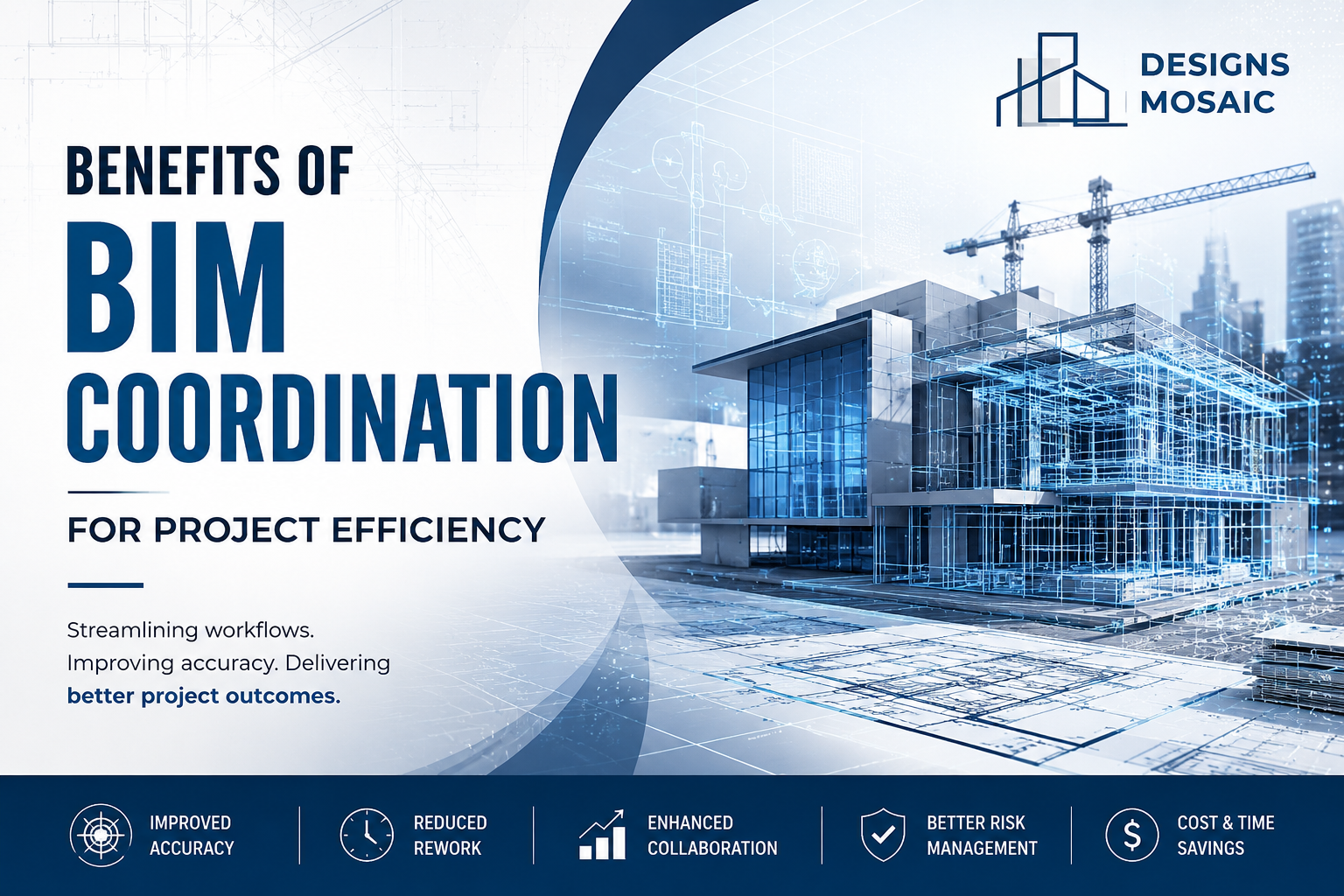
The modern approach towards building construction requires several groups of people who work with interrelated systems in the same building. Architects, structural engineers, MEP consultants, contractors, and fabricators all participate in the building process but do so using their respective tools and workflows. As a consequence of such a disjointed approach, the integrated systems of modern buildings may cause delays, design conflicts, cost overruns, and rework. It is precisely in this case that BIM coordination services became an integral part of successful project completion.
Building Information Modelling has changed the way construction projects are managed and planned. Unlike the conventional way of working, in which drawings were used separately for planning, BIM provides a platform through which the clash and coordination issues can be sorted out at an earlier stage. This promotes better coordination and communication among team members.
Understanding BIM Coordination in Construction
BIM Coordination involves the combination of architecture, structure, and MEP models in one digital model. The reason behind the process is to ensure that any problems or clashes between the different systems are identified before starting the actual construction process.
For instance, ductwork running across beams or plumbing coming across the electrical system can be identified in advance instead of doing so during construction. Such problems can prove to be costly if not handled in advance.
Coordination does not only focus on detecting clashes. It also helps improve collaboration among the stakeholders since it provides an integrated system where everyone gets updated information.
Reducing Design Clashes Before Construction Begins
One of the main benefits of the BIM coordination process is its capability to detect design clashes from the very beginning.
The conventional construction process may discover clashes only at a later stage after installation commences. This stage will call for extra efforts and modifications to correct the clashes. Using BIM technology allows one to solve them even prior to initiating physical processes.
Among the most widespread coordination clashes, there can be mentioned:
- HVAC clashes with structural parts
- Plumbing clashes with electrical drawings
- Ceiling space limitations for MEP installations
- Miscalculations in equipment location dimensions
- Difficult access to servicing
Resolving such problems via digital means will help avoid disruptions in the process of building.
Better Communication Across Teams
There is more than one discipline involved in the course of a construction project. Confusion among various departments may result in conflicting drawings and implementation issues.
Benefits of BIM coordination include:
- Centralized model for the project that everyone can access
- Design updates and changes in real-time
- Better visualization of the project components
- Understanding of the construction process
With all members following one coordinated model, project teams will be able to make their decision-making process more efficient and avoid any confusion.
Improved Project Scheduling and Planning
Efficient scheduling plays an important role in the successful completion of any project. BIM Coordination helps plan the project as it allows for the visualization of interactions of various systems within the building.
This makes it possible for the project manager to:
- Sequence installation activities efficiently
- Avoid trade conflicts during execution
- Allocate labor and resources more effectively
- Reduce downtime caused by coordination errors
Proper planning makes construction activities more systematic and efficient.
For large-scale commercial and industrial buildings, coordinated modeling also helps in the fabrication process. Components can be prefabricated with greater efficiency as the coordinated model helps eliminate any uncertainties regarding measurements and positioning.
Cost Savings Through Reduced Rework
Re-work at construction sites is one of the main factors causing projects to go over budget. Any mistakes realized on-site will involve destruction, new designs, replacement of materials, and extra labor charges.
Utilizing BIM coordination services will assist in avoiding these costs by recognizing issues during the design phase itself. Even a little alteration in digital format can save lots of money for future purposes.
Money-saving advantages include:
- Fewer change orders
- Minimal wastage of materials
- Fewer labor costs due to less correction work
- Minimal delays in projects
- Optimum procurement planning
With time, this will lead to considerable gains that boost project profitability.
Enhanced Visualization for Stakeholders
The process of understanding two-dimensional drawings is not always easy, which can cause a misunderstanding of the project layout and connections between systems.
Using BIM, we can improve the 3D visual representation, making it easier to understand the concept. This is helpful when it comes to:
- Client presentations
- Construction planning meetings
- Facility management preparation
- Design approvals and modifications
Enhanced visualization eliminates the scope for any misunderstandings, helping to facilitate more informed decision-making on time within the project lifecycle.
Supporting Faster Decision-Making
The timelines for many construction projects are often tight, with delayed decisions affecting numerous phases of execution. BIM coordination ensures quick resolution of issues since the problems are detected in one centralized digital space.
This approach allows quick conflict detection, discussions regarding alternative solutions, and finalization of decisions, eliminating any need for time-consuming manual processes.
Increased Accuracy in Documentation
Effective documentation is an essential requirement within the construction project. With coordinated BIM models, the documentation process becomes accurate and ensures consistent alignment between all drawings, schedules, and quantities related to the latest changes within the project.
These include:
- Accurate shop drawings
- Proper quantity takeoffs
- Installation documents
- Sequencing of construction activities
Proper documentation will ensure efficient transfer of information during handover phases as well as when conducting facility management.
Safer Construction Environments
Failure in coordinating activities on the construction site may result in creating safety risks. Unexpected collisions or any other unplanned changes may lead to the need to improvise under dangerous circumstances.
The benefits of BIM coordination as regards safety during project implementation include:
- On-site certainty
- Better planning for installations
- Effective site logistics
- Early identification of access or clearance problems
Coordinated approaches can contribute to creating more controlled environments in terms of construction operations.
Why BIM Coordination Matters for Complex Projects
With technological progress, construction projects grow increasingly more complex. High-rise structures, hospitals, airports, data centers, and even industrial facilities involve the coordination of many different aspects of implementation.
Coordination has become crucial in such projects, turning into an essential element of efficient work. In this regard, modeling workflows allow performing:
- Interdisciplinary coordination
- Detection of clash reporting
- Integration of 4D scheduling
- Simulation of construction sequencing
- Digital construction management
They help in improving project management throughout design and development, to the final implementation.
A Smarter Approach to Efficient Construction
Construction is slowly moving towards more advanced methodologies. The use of coordinated modeling techniques gives such companies a significant advantage in ensuring efficient project implementation by preventing delays, improving quality, and managing resources effectively.
Today, organizations are seeking to avail themselves of 3D BIM modeling, MEP clash detection, construction documentation services, virtual design & construction, BIM outsourcing services, and Revit modeling services in order to achieve improved efficiencies in the execution of their projects. Companies like Designs Mosaic provide these new-age demands in projects through the provision of comprehensive models and coordination services, which go a long way in facilitating the processes in all aspects of construction. Most importantly, reliable BIM coordination services continue to play a major role in improving project efficiency, reducing rework, and supporting smoother collaboration throughout the construction lifecycle.