
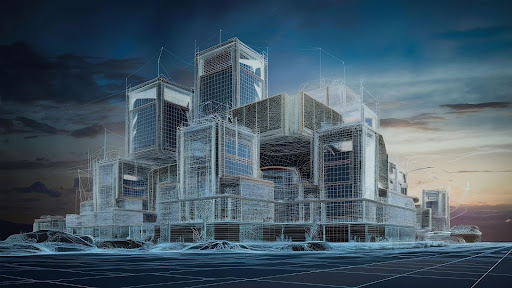
The architecture, engineering, and construction (AEC) sector is witnessing dynamic technological advancements. BIM has already revolutionized the way architecture professionals carry out their activities in the field of building construction. However, the addition of Augmented Reality (AR) technology is taking the visualization and collaboration of building projects to the next level. Many architecture and construction companies are using Revit outsourcing services to carry out their modeling activities in the most efficient way while focusing more on innovation in building design.
Augmented Reality technology is an enhancement of BIM technology in which the building model is superimposed over the physical environment. This way, the building components are no longer visualized in 2D or 3D formats. Rather, the architecture and engineering professionals are able to interact with the building components in the real environment. This way, the decision-making capabilities of the professionals are improved, and the collaboration of the building team is enhanced.
Understanding the Role of AR in BIM Workflows
The information provided within the BIM model includes details about each and every component of the building, ranging from the material used to the dimensions and the structural components of the building itself. The integration of the information provided within the BIM model into the real world is achieved through the application of augmented reality, whereby the AR devices, tablets, smartphones, and even headsets display the BIM model itself.
The main advantage of the integration of the BIM model into the real world is the ability to visualize the design before the construction of the building itself. For instance, the structural engineer will be able to see the exact location of the beams, columns, and mechanical components of the building itself at the construction site through the application of the augmented reality devices.
The other major advantage of the integration of the BIM model into the real world is the ability to enhance collaboration between the individuals involved in the construction of the building itself.
Key Benefits of AR-Enabled BIM
Augmented Reality helps in the improvement of the overall BIM experience in the following ways:
- Improved design visualization
AR allows stakeholders to see a building model in full scale within its real environment.
- Better clash detection
Potential conflicts between structural, architectural, and MEP components can be identified earlier.
- Enhanced communication
Complex technical designs become easier to explain to clients and non-technical stakeholders.
- Reduced construction errors
On-site teams can verify model data against physical structures in real time.
- Faster decision-making
Teams can review design changes instantly without relying solely on drawings.
These advantages are particularly useful for large projects where coordination between multiple teams is critical.
Expanding Capabilities Through Outsourced BIM Expertise
As BIM and AR technologies improve, many architecture and engineering firms need more modeling expertise and capability. Revit outsourcing services can be of great help to firms in providing detailed BIM models, accurate Revit families, and coordinated documentation for projects.
Outsourcing allows firms to expand their BIM production capabilities without having to make significant investments in new resources. Skilled and experienced teams can help firms with 3D modeling, Revit family development, and design documentation, among other services. This helps ensure accurate and flexible BIM models, ready for the latest technologies such as AR visualization.
Additionally, outsourcing partners often follow standardized workflows and quality checks to ensure precise modeling and smooth integration with project requirements. This approach helps maintain consistency across projects while improving efficiency.
Real-World Applications of AR in Construction
The applications of AR with BIM are increasing and include several aspects of the building process, such as:
1. Design Review
The architect will be able to review the building’s orientation, space planning, and aesthetics by projecting the building design onto the building site using AR and BIM.
2. Construction Guidance
The contractor will be able to see the building plans directly on the building site using AR and BIM.
3. Facility Management
The building management will be able to access information about hidden building components, such as plumbing and electricity, using AR and BIM.
4. Training and Safety
Using AR and BIM, workers will be able to understand complex building processes before actually operating on the building site.
The applications demonstrate how AR helps bridge the gap between digital design and construction in the real world.
Where Digital Visualization Meets Real-World Construction
The marriage of Building Information Modeling and Augmented Reality is revolutionizing building design, construction, and maintenance processes. Augmented Reality, in particular, is helping teams identify potential issues, improve collaboration, and ensure precision in building and construction processes.
Organizations such as Designs Mosaic emphasize the need for accurate building information modeling, advanced modeling, and detailed Revit development, as they play a vital role in supporting modern building and construction technologies. Revit outsourcing services, when used with such technologies, will help teams navigate complex building models and prepare for future innovations in building and construction processes.
The evolution of Augmented Reality is expected to make the integration of AR and BIM a standard practice in the building and construction industry, ensuring efficient planning, intelligent building and construction processes, and well-informed design decisions.